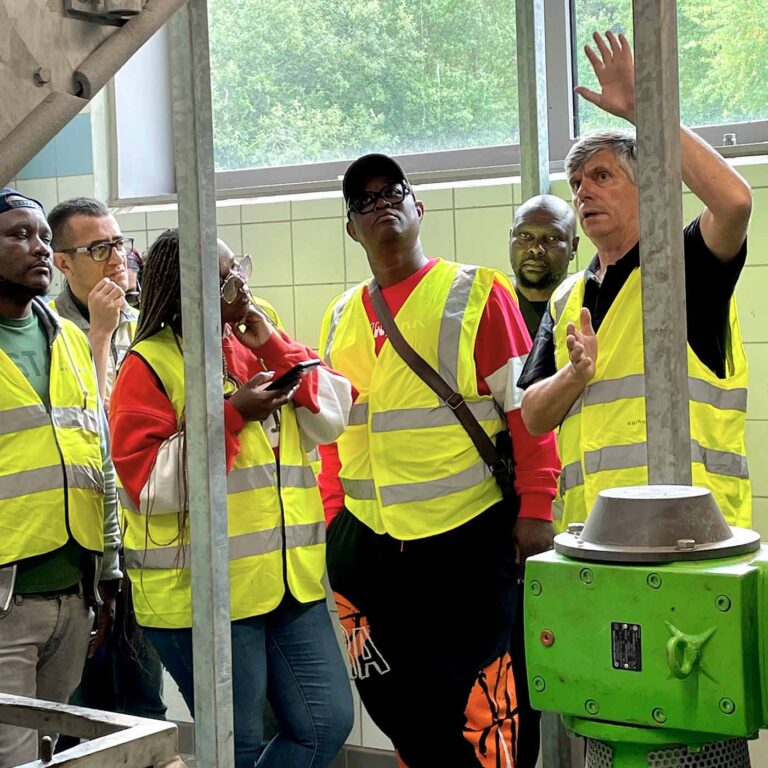
Erasmus+ action support

We support partnerships between Danish higher education institutions and partners in Danida cooperation countries — strengthening international collaboration, knowledge sharing, and mobility through Erasmus+ opportunities focused on sustainable development and long-term impact.

The Programme and its funding possibilities

The European Union’s Erasmus+ programme facilitates a wide range of actions for education purposes within and outside Europe, including in African countries. For all details about the Erasmus+ actions, please consult the Erasmus+ Programme Guide.

The Knowledge and Innovation Programme includes an Erasmus+ track that seeks to enhance collaboration between African and Danish Higher Education Institutions (HEIs) through the following three funding opportunities:

All Danish higher education institutions holding an Erasmus Charter for Higher Education are eligible applicants for funding under this track of the Knowledge and Innovation Programme. Note that Illisimatursafik University is also eligible and can apply.

Applications can be submitted, and will be processed, on an ongoing basis as long as funds remain. Processing time is approximately two months.

The Danish higher education institutions can partner with relevant institutions in all African countries under this track of the Knowledge and Innovation Programme. For more details on the Erasmus+ regions covering Africa, please see the online application form.

Top-up for Erasmus+ scholarships

Top-up funds for Erasmus+ student mobility is a supplement to Erasmus+ scholarships granted to Danish Higher Education Institutions by the Danish Agency for Higher Education and Science.

The top-up scholarships are for incoming students from African countries studying in Denmark through the Erasmus+ programme. The aim of the top-up scholarships is to enable more African students to come to Denmark on study exchange within the Erasmus+ programme.

Danish higher education institutions can apply for an overall grant from the Knowledge and Innovation Programme, which covers individual top-up scholarships for the expected number of incoming students from African partner institutions, following the guidelines below. The grant will be transferred to the responsible Danish institution, which will disburse the top-up scholarships to the individual students together with the regular Erasmus+ scholarship.

GLOSSARY

Grant: The overall grant given from the Knowledge and Innovation programme to a Danish Higher Education Institution. Higher education institutions are responsible for the administration, and reporting, of the grant. The grant covers a number of individual top-up scholarships for students, as well as an administrative fee for the Danish higher education institutions.

Grant period: The grant period, which is a maximum of 36 months for Erasmus+ top-ups, covers the time the Danish HEIs have to disburse KIP grant funds to eligible African students.

Scholarships: Refer to the funds disbursed to individual students under the Erasmus+ programme.

Top-up scholarships: Refer to the individual top-up scholarships (payments on top of Erasmus+ scholarships) made available from the Knowledge and Innovation Programme, through Danish higher education institutions. In combination, the two scholarships should make up sufficient funds to enable more students from African higher education institutions to study in Denmark as part of their education.

Danish Higher Education Institutions, that have been awarded KA171 funding from the Danish Agency for Higher Education and Science, are eligible to apply for a grant for top-up scholarships for incoming students from African HEIs on Erasmus+ scholarships for study mobility. HEI’s in Greenland and the Faroe Islands are also eligible to apply.

Applications for funds through the Knowledge and Innovation Programme can be submitted, and will be processed, on an ongoing basis. Processing time is approximately two months.

It is possible to apply for grants several times, but only once a year per Danish Higher Education Institution.

Applications for KIP will be accepted only if submitted via DFC’s online application system, SurveyMonkey Apply (SMA).

Danish HEIs can apply for a grant from the Knowledge and Innovation Programme covering top-up scholarships for incoming Erasmus+ students from African HEIs in the activity category “incoming learner mobility” under KA171. The grant cannot cover staff mobility, student mobility for traineeship, short term blended mobility or Danish students on Erasmus+ exchange in African institutions.

It is possible to apply for grants from the Knowledge and Innovation Programme based on the number of Erasmus+ scholarships under KA171 awarded to the Danish HEI to be implemented from September 2025.

KIP grants are awarded to the applying Danish Higher Education Institution (HEI) for a maximum of 36 months.

Each individual top-up scholarship from the Knowledge and Innovation Programme includes:

  • A daily rate for students studying in the Copenhagen area, including Lyngby and Roskilde.
  • A daily rate for students studying outside of the Copenhagen area.
  • A lump sum per student to cover visa fee and insurance.
  • A start package for students staying more than 90 days in DK.
  • An administrative fee for the Danish HEI.

The daily rates are based on the place of study, not the personal address of the student while in Denmark.

KIP top-up scholarships are disbursed to the students by the Danish HEI together with the regular Erasmus+ scholarship. The KIP grant can only be allocated to the students by the Danish HEI as described above.

The application must be submitted in English, and the following requirements put forward in Danida Fellowship Centre’s online application form must be filled in:

  • Contact person at the Danish HEI
  • Amount applied for as per budget template
  • Grant period for the KA171 grant(s)
  • Expected number of incoming African students, home country of the students, and expected duration of their study stay in Denmark during the grant period, broken down by semester
  • Copy of Annex 1 of the KA171 contract from the Danish Agency for Higher Education and Science indicating the number of Erasmus+ scholarships awarded to students from African partner institutions under the incoming student mobility for studies category in KA171

Danida Fellowship Centre will assess applications based on the eligibility and compliance with the application guidelines.

The Danish HEI is responsible for management and accounting of the grant, and will receive a formal letter of grant for signature when awarded a grant Top-up scholarships must be disbursed to students by the Danish HEI within the approved KIP grant period, and Danida Fellowship Centre must be notified in case of deviations from the approved plans.

The responsible Danish HEI is required to submit an annual report as per the format in Danida Fellowship Centre’s online application and reporting system, Survey Monkey Apply. The report must include overall general information about the grant such as number of top-up scholarships disbursed, gender of scholarship recipients, home HEI and countries of the students, the study programme students were enrolled in etc. Short-form information about challenges and lessons learned, as well as adjustments to the approved plans if relevant, will also be required.

Annual accounts must be submitted together with the above form to Danida Fellowship Centre, and include a Management Endorsement of Accounts. Template is provided in the General Conditions for the Knowledge and Innovation Programme .

Upon completion of the grant period, the Danish HEI is requested to fill in a final report format concluding on the total number of top-up scholarships disbursed, as well as lessons learned during the implementation period.

The final report must also include audited accounts, as per the General Conditions for the Knowledge and Innovation Programme, specifying how the approved budget has been spent. Unspent funds must be returned to Danida Fellowship Centre.

For further information on obligations and reporting requirements, see the General Conditions.

Questions about the programme?

If you have any questions or need further information about the Knowledge and Innovation Programme, please feel free to reach out.

Seed funding for developing International Credit Mobility agreements

To strengthen opportunities for mutual exchange between higher education institutions in Denmark and HEIs in African countries, the Knowledge and Innovation Programme includes a seed funding grant to develop new International Credit Mobility agreements. The aim of this grant is to support the preparation and establishment of new International Credit Mobility agreements between Danish and African higher education institutions, which in time, can deepen partnerships and relations, and increase mobility between these higher education institutions.

All Danish HEIs with an Erasmus+ Charter for Higher Education.

Ongoing deadline. Seed funding applications to the Knowledge and Innovation Programme for ICM agreements will be processed on an ongoing basis. Processing time is approximately two months.

Applications will be accepted only if submitted via DFC’s online application system, SurveyMonkey Apply (SMA).

KIP seed funding for ICM agreements can cover expenses related to the preparation of new ICM agreements between Danish and African HEIs. Eligible budget items include:

  • Travel expenses for staff from Danish and African higher HEIs (economy class only).
  • Per diem/daily subsistence allowances for staff from Danish and African HEIs (following the Danish state regulation rates).

No administration costs, salaries or overheads can be included in the budget.

It is possible to apply for up to DKK 50,000.
The KIP grant period is up to 12 months.

The KIP application must be submitted in English, and the following elements in DFC’s online application form must be filled in:

  • Contact person from the HEI in Denmark.
  • Amount applied for, incl. completed budget template and co-funding, if relevant.
  • Timeline and activity plan, incl. date for expected submission of application for KA171 funding from the Danish Agency for Higher Education and Science.
  • Country(/ies) of potential partner(s).
  • Brief description of the expected agreement incl. prospective partner institutions.

Applications for the KIP grant must be submitted via Danida Fellowship Centre’s (DFC) online application system SurveyMonkey Apply (SMA).

DFC will assess applications based on the feasibility of the proposed partnership development, alignment between planned activities and budget, as well as compliance with the application guidelines.

The Danish Higher Education Institution (HEI) is responsible for management and accounting of the KIP seed funding grant for ICM agreements, and will receive a formal letter of approval if awarded a KIP grant.

The expected outcome of the KIP grant is an ICM agreement with an African partner institution, subsequently an application for KA171 from the Danish Agency for Higher Education and Science.

The Danida Fellowship Centre recognizes that it might not be feasible to submit an application for student mobility under KA171 within the KIP grant period. In that case, an estimated date for submission of the application to the Danish Agency for Higher Education and Science must be indicated in the final report.

Project development activities must be implemented in the approved KIP grant period, and DFC must be informed in case of deviation from the suggested date for submitting the KA171 application.

A final report must be submitted via DFC’s electronic application and reporting system no later than three months after completion of grant activities.

  • The final report must follow the requirements put forward in the online system, and contain the following:
  • Overview of activities carried out.
  • Overview of how these activities did/did not align with the plans outlined in the application.
  • Overview of expenditures, and financial settlement, including a Management Endorsement of Accounts.
  • Proof of establishment of a new International Credit Mobility agreement, or brief explanation of why it was not possible to establish an agreement as planned.
  • Proof of submission of a KA171 application to the Danish Agency for Higher Education and Science, or prospective date for submission of the application, if it is not submitted within the project period.

Funds must be spent within the KIP grant period, and unspent funds must be returned to DFC.

For further information on obligations and reporting requirements, see the General Conditions.

Seed funding for Capacity Building in Higher Education

To increase Danish engagement in the Erasmus+ capacity building in higher education action, the Knowledge and Innovation Programme provides seed funding for Danish Higher Education Institutions to facilitate the preparation of applications to Capacity building in higher education in collaboration with European and African partners.

The Capacity building in higher education is fully anchored in the European Commission, and projects are selected through a central and highly competitive annual call for applications. As such, the Capacity building in higher education seed-funding under the Knowledge and Innovation Programme is an opportunity for aspiring partnerships to prepare a joint project application and enhance their chances to be awarded a The Capacity building in higher education grant. Knowledge and Innovation Programme seed funding for The Capacity building in higher education can be applied for until mid-2030.

All Danish Higher Education Institutions (HEIs) with an Erasmus+ Charter for Higher Education.

Applications must be developed in collaboration with prospective HEIs in Africa and Europe, but submitted by the Danish HEI.

Knowledge and Innovation Programme seed funding applications for Capacity Building in Higher Education (CBHE) will be processed on an ongoing basis. Processing time is approximately two months.

Applications will be accepted only if submitted via DFC’s online application system, SurveyMonkey Apply.

Seed funding can cover expenses related to joint project proposal development activities for Danish and African Higher Education Institution (HEI) partners. Eligible budget items include:

  1. Expenses for travel for involved staff from Danish and/or African HEIs (Economy class travel only).
  2. Per diem/daily subsistence allowances for African and Danish partners (following Danish state regulation rates).
  3. Joint project development activities such as seminars, proposal writing workshops etc.
  4. External audit costs.

No administration costs or overhead can be included in the budget, and salaries cannot be covered.

Expenses for prospective European partner institutions (outside of Denmark) cannot be funded under the KIP grant.

It is possible to apply for up to DKK 200.000 per application.

The KIP grant duration is 6-18 months. Activities cannot extend beyond the submission of a CBHE application to the European Commission.

The Knowledge and Innovation Programme (KIP) application must be submitted in English, including the following information:

  • Contact person from the Danish Higher Education Institution.
  • Amount applied for, incl. completed budget template and co-funding (if relevant).
  • Country/ies of potential partner(s).
  • List of involved partner institutions, including a brief description of how all partners have contributed to the preparation of the application for seed funding and, if relevant, of existing collaboration.
  • List of participants, including institutional affiliation and position.
  • Indication of which strand the partners intend to apply for within the CBHE.
  • Brief project description incl. outputs/deliverables and planned activities for the seed funding.
  • Timeline for project development, including expected date for submission of a CBHE application.
  • Collaboration arrangements and responsibilities.
  • Endorsements by the head of the institution or department, of all involved HEIs (endorsement is done directly in the online application system).

Applications must be submitted via Danida Fellowship Centre’s (DFC) online application system SurveyMonkey Apply (SMA).

The Danida Fellowship Centre (DFC) will assess applications based on the:

  • Evidence of equitable involvement of all partners in the preparation of the project.
  • Feasibility and relevance of the proposed project development incl. alignment between planned outputs, activities and budget.
  • Adherence to the three CBHE strands.
  • Compliance with the application guidelines.

The Danish Higher Education Institution (HEI) is responsible for the management of, and accounting for, the CBHE seed funding grant, and will receive a formal letter of approval when awarded a KIP grant.

The expected outcome of a KIP seed funding grant is submission of a CBHE application. The KIP grant receiver must send the confirmation receipt for the CBHE application from the EU Funding and Tenders Portal to DFC, and notify DFC about the result once the European Commission has assessed the CBHE application.

Project development activities must be implemented in the approved KIP grant period, and not later than the submission date for the CBHE application. DFC must be informed immediately if an application will not be submitted as expected or cannot be submitted in time. Further expenditures are not permitted after the notification of DFC. If the notification is unduly delayed, DFC reserves the right to reclaim funds spent after the notification should reasonably have been given to DFC.

It is recognised that award of the KIP seed funding grant, and subsequent submission of a CBHE application to the European Commission, is no guarantee for award of the CBHE grant.

A final report must be submitted via Danida Fellowship Centre’s electronic application and reporting system no later than three months after the submission of the CBHE application to the European Commission or, if an application is not submitted, termination of KIP grant activities.

The final report must follow the requirements put forward in the online system, and contain the following:

  • Overview of activities carried out.
  • Description of how activities did/did not align with the plans outlined in the application.
  • Copy of receipt from the EU Funding and Tenders Portal to prove submission of CBHE application, OR a full explanation if the project did not result in an application for CBHE.
  • Overview of expenditures.
  • Audited accounts.

Funds must be spent within the grant period, and unspent funds must be returned to DFC.

For further information on obligations and reporting requirements, see the General Conditions (available 1 July 2025).

Explore

KNOWLEDGE AND STORIES

NEWSLETTER

Sign up for our newsletter
View our previous newsletters here.

Engage with us

Get inspired on our social media
Danida Fellowship Centre © 2026. All Rights Reserved.

We are upgrading our website

We are currently improving our website to give you a better experience. Some links or features may be temporarily unavailable while we complete the update. Thank you for your patience.