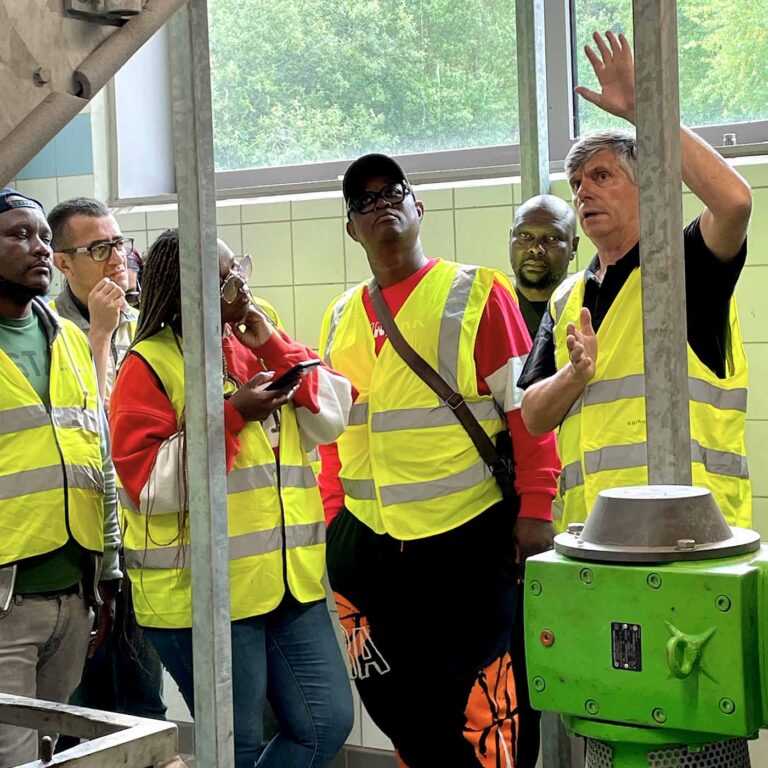
What happens when students from different countries meet, study together and exchange ideas? They encounter new perspectives, challenge their own assumptions and learn from each other’s experiences.
This is the idea behind the Knowledge and Innovation Programme that was launched in 2025. It seeks to strengthen collaboration between higher education institutions in Denmark and African countries through university partnerships and student exchange activities.
An example of such a collaboration is the University Partnership for Immunology and Vaccinology Capacity in Africa, known as UPIVAC. It brings together the University of Copenhagen, the University of Ghana and Kilimanjaro Christian Medical University College in Tanzania. This project aims to strengthen capacity and higher education in the fields of immunology and vaccinology.
Under this partnership, Lordina Aisa from Ghana and Ashraf Mahmood from Tanzania are pursuing Master’s degrees in immunology and inflammation at the University of Copenhagen.
More than a degree
The Knowledge and Innovation Programme builds on intercultural professional encounters and mutual learning to strengthen collaboration and help address shared global challenges.
The master’s student exchange is therefore also a two-way learning experience. While students from Ghana and Tanzania gain academic knowledge and experience in Denmark, they also bring valuable perspectives from their home countries. As Professor Michael Alifrancis of the University of Copenhagen explains, their experience of health challenges in their home countries offers important insights to Danish students and researchers.
“This project is important because not only do we build up the capacity in the South in immunology and vaccinology, but the South comes with a lot of experience of some of these diseases. We don’t have that experience, they do”, Professor Michael Alifrancis says.
By bringing these different perspectives together, the Knowledge and Innovation Programme creates opportunities for future cross border collaboration between Denmark and partner countries in Africa.
Danida Fellowship Centre administers the Knowledge and Innovation Programme, which is part of Denmark’s Africa Strategy. The aim is to strengthen partnerships between Danish and African higher education institutions by promoting knowledge exchange and collaboration.
The Knowledge and Innovation programme has three open call rounds, in 2025, 2026 and 2027. In 2025, 10 projects were awarded funding. This year, 24 applications are being assessed. The result of the assessment is expected by the end of the year.
Read about the Knowledge and Innovation Programme here and the special 2026 newsletter about the programme here